July 4, 2026

America at 250

10 Things You Think You Know
But Probably Don't

--days
--hours
--min

until the Semiquincentennial

On July 4, 2026, the United States turns 250. Semiquincentennial, if you want to sound like you belong at a cocktail party full of historians. Two and a half centuries of arguing, inventing, fighting, building, and occasionally electing people we later regret.

You'll hear a lot of speeches this summer. A lot of fireworks. A lot of red, white, and blue bunting stapled to porch railings. Most of it will be the same 20 facts you half-remember from a high school class you slept through.

This isn't that.

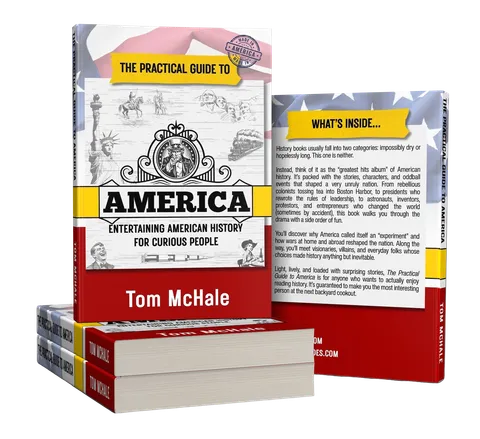
Below are 10 true things about America's first 250 years that most people get wrong, don't know, or have never heard. They come from my book The Practical Guide to America, and they're the kind of stories that make you stop mid-sip and say, "Wait, that's real?"

Yes. It's real. All of it.

1 of 10

July 4 isn't actually Independence Day. July 2 is.

The Continental Congress voted to declare independence on July 2, 1776. John Adams wrote home to his wife Abigail that July 2 would "be celebrated by succeeding generations as the great anniversary festival," with "pomp and parade," "bonfires and illuminations," from one end of the continent to the other.

Party and celebration? Yes. Correct date? No.

The official adoption of the Declaration of Independence text happened two days later, on July 4. That's the date printed on the document. That's the date everyone remembered. Adams, stubborn to the end, reportedly refused to attend July 4 celebrations because he thought they were celebrating the wrong day.

Tell that to someone grilling hot dogs this summer, and get ready for fireworks of a different type.
2 of 10

The signers didn't all sign on July 4, either.

The famous painting of all 56 Founding Fathers standing around John Hancock in a room full of powdered wigs? Didn't happen. Not on July 4. Not in one day. Not in one ceremony.

Most of the signatures were added on August 2, 1776, nearly a month later. Some signers weren't even in Philadelphia on July 4. A few didn't sign until months after that. Thomas McKean of Delaware may not have signed until 1777.

The Declaration was a process, not a photo op. It took weeks to draft, days to debate, and months to fully sign. Which makes sense when you remember that every single name on that document was, legally speaking, a confession of treason against the British Crown.

3 of 10

"The United States of America" was basically a new brand.

Before July 1776, there was no country called "the United States of America." There were colonies. There were "United Colonies." There was Virginia, Massachusetts, Pennsylvania. There was no unified name because there was no unified thing to name.

The phrase "United States of America" shows up in the Declaration of Independence itself. That's the debut.

Think about that. The name of the country is inside the document that created the country. The whole thing reads like a startup founders' first press release, except the product is a nation and the competitor is the world's largest empire.

4 of 10

Paul Revere never said "The British are coming."

He wouldn't have. That night, most people in Massachusetts still considered themselves British.

What Revere actually shouted, according to contemporary accounts, was closer to "The Regulars are coming out," meaning British regular army troops. He also didn't ride alone. William Dawes and Samuel Prescott rode too. Revere was captured by a British patrol partway through his ride. Prescott was the one who actually made it to Concord.

Longfellow wrote the famous poem in 1860, 85 years after the ride, and he basically invented the mythology on the spot because America needed a unifying legend as the Civil War loomed. Great poem. The history was a bit loose on the details.

5 of 10

Washington's inauguration was on Wall Street.

Not Washington, D.C. There was no Washington, D.C. in 1789. The new capital hadn't been built yet.

George Washington was sworn in as the first president on April 30, 1789, on the balcony of Federal Hall on Wall Street in New York City. He wore a brown suit made of American wool, not military regalia, a deliberate statement that he was a citizen, not a general.

The capital then moved to Philadelphia for ten years while Washington, D.C. was under construction. John Adams was the first president to actually live in the White House, and he moved in while the plaster was still wet.

6 of 10

The Bill of Rights was supposed to have twelve amendments.

Not ten. Twelve.

When Congress sent the Bill of Rights to the states for ratification in 1789, there were twelve proposed amendments. Two didn't make the cut at the time. One, about the number of members in the House of Representatives, is still technically pending ratification more than two centuries later.

The other one, limiting when Congress could raise its own pay, did eventually pass. It became the 27th Amendment. Ratified in 1992. That's 202 years and seven months after James Madison first proposed it.

A college student named Gregory Watson is the reason it finally passed. He wrote a term paper arguing it was still ratifiable, got a C on the paper, and then spent the next decade lobbying state legislatures until enough of them agreed with him.

7 of 10

The Constitution never uses the word "slavery."

Not once.

It uses "other persons." It uses "such persons as any of the states now existing shall think proper to admit." It uses "person held to service or labor." The Framers wrote around it, through it, past it. They compromised on it. They counted enslaved people as three-fifths of a person for congressional representation. They gave Congress the power to ban the international slave trade, but not until 1808.

They just never wrote the word.

That omission is one of the most loaded silences in the English language. It took the 13th Amendment in 1865, passed during the final months of the Civil War, to finally put the word in and ban the thing.

8 of 10

The Statue of Liberty was originally meant for Egypt.

The French sculptor FrΓ©dΓ©ric Auguste Bartholdi's first big idea was a giant statue at the entrance to the Suez Canal. A robed woman holding a torch, titled Egypt Carrying the Light to Asia. Egypt passed. Too expensive.

So Bartholdi retooled the concept, shipped it across the Atlantic, and in 1886 it rose on a small island in New York Harbor as Liberty Enlightening the World. The French government paid for the statue. America paid for the pedestal, and barely, after Joseph Pulitzer crowd-funded the last stretch through newspaper donations.

The seven rays in her crown represent the seven continents and seven seas. The tablet in her hand reads July IV MDCCLXXVI. July 4, 1776.

9 of 10

Thanksgiving exists because a children's author wouldn't stop writing letters.

Sarah Josepha Hale wrote "Mary Had a Little Lamb." She also edited the most popular women's magazine in America for 40 years.

And she spent 17 years writing editorials and letters to U.S. presidents and other officials, trying to get Thanksgiving declared a national holiday. Zachary Taylor, Millard Fillmore, Franklin Pierce, James Buchanan, all got the letters. All politely declined or ignored her.

In 1863, in the middle of the Civil War, Abraham Lincoln finally agreed. He proclaimed the last Thursday of November a national day of thanksgiving, partly because Hale wouldn't give up, and partly because he thought a shared holiday might help stitch a broken country back together.

Mashed potatoes slathered with obscene amounts of gravy exist because a woman refused to take no for an answer.

10 of 10

The 19th Amendment came down to one vote, and a mom.

August 1920. Women's suffrage had been fought for, protested for, marched for, and jailed for, for more than 70 years. The 19th Amendment had been ratified by 35 states. It needed one more.

Tennessee was the fight. The state House tried twice to table the amendment and deadlocked 48 to 48 both times. A young legislator named Harry Burn wore a red rose on his lapel, the signal for "no." He had his mother's letter in his coat pocket.

Febb Burn had written: "Hurrah and vote for Suffrage and don't keep them in doubt … Don't forget to be a good boy."

When his name was called on the final vote, Harry voted yes. The amendment passed 49 to 47. American women got the right to vote, everywhere, on August 26, 1920.

One switched vote. One mom. One letter in a coat pocket. That's how close the whole thing was.

From the Practical Guide series

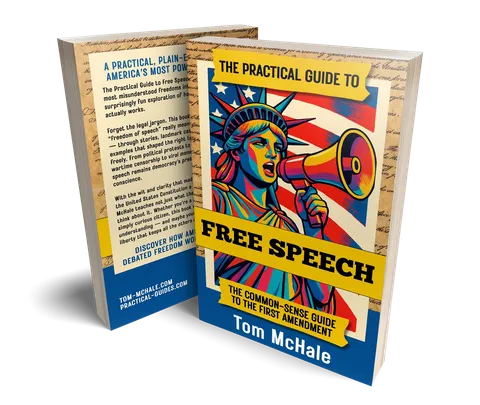
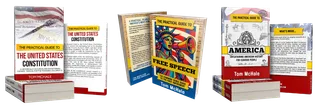
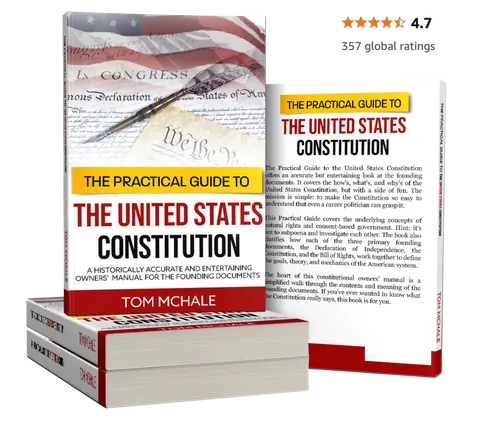
These stories are pulled from The Practical Guide to America, which walks through all 250 years this way, one surprising story at a time. The companion books cover the Constitution and Free Speech with the same approach: real stories, no textbook voice, zero boredom.

250 years is a lot of stories.

This is the stuff I love about American history. Not the Mt. Rushmore version, where everything is chiseled and inevitable. The messy version, where the country almost ended a dozen times, where regular people made decisions that ended up in textbooks, where the timeline is full of accidents and stubbornness and letters from moms.

July 4, 2026, is a good excuse to learn some of it.

The 3-book Practical Guide bundle: America, Constitution, and Free Speech

Celebrate the 250th the Smart Way

Get All Three Books

The Practical Guide to America walks through the whole 250 years, one surprising story at a time. The Practical Guide to the United States Constitution is the owner's manual most people never got handed. The Practical Guide to Free Speech is the First Amendment without the law school part.

Paperback, eBook, or audiobook. Your call.

Get the 3-Book Bundle
Tom McHale

Tom McHale is the author of The Practical Guide series, including books on the Constitution, America, and Free Speech. He writes like he talks: conversational, occasionally funny, and always with a point.